
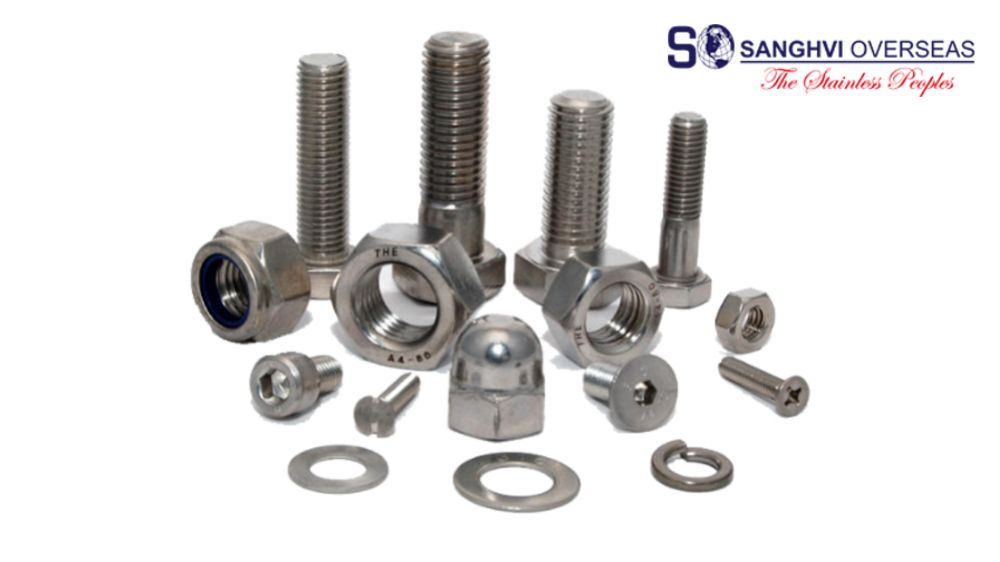
Water treatment plants combine moisture, chlorides, chemical dosing, and wastewater in one environment, with temperatures ranging from 5°C to 60°C. Fasteners holding pipelines, tanks, and pumps together in these conditions face a real threat. Corrosion undermines mechanical integrity within months when the wrong grade gets selected. Duplex Steel Fasteners solve this by pairing ferritic strength with austenitic corrosion resistance, giving Duplex Fasteners tensile strength nearly double that of standard 316 stainless and a practical fit for water and wastewater applications.
What Are Duplex Steel Fasteners?
Duplex stainless steel gets its name from a microstructure split roughly 50:50 between austenite and ferrite phases. That balance delivers the toughness of austenitic steel alongside the strength of ferritic steel. Grade 2205 remains the most widely specified duplex alloy, with a minimum yield strength of 450 MPa, nearly double the 170 MPa offered by 316L stainless. Fasteners made from this alloy resist pitting and crevice corrosion at chloride concentrations up to 3-4%, common in desalination plants where austenitic fasteners degrade faster. Corrosion Resistant Duplex Steel Fasteners meet these operating demands.
Why Water Treatment Plants Need High-Performance Fasteners
Treatment facilities expose fasteners to conditions that carbon steel cannot survive long term. Continuous water contact combined with chloride from disinfection chemicals accelerates surface pitting. Sodium hypochlorite and ferric chloride dosing add further chemical attack, and wastewater lines carry sulfides and organic acids that lower pH at the fastener surface. A single corroded bolt on a flange connection can trigger leakage, downtime, and replacement costs across an entire line.
Key Benefits of Duplex Steel Fasteners in Water Treatment Plants
Excellent Corrosion Resistance
Duplex steel fasteners resist pitting and crevice corrosion at chloride levels that degrade 316 stainless within a single season.
High Mechanical Strength
A minimum yield strength of 450 MPa lets duplex fasteners handle higher clamping loads on flanges and pump housings.
Resistance to Stress Corrosion Cracking
The balanced austenitic-ferritic structure blocks the crack paths behind stress corrosion cracking in chloride and sulfide environments.
Long Service Life
Combined corrosion resistance and strength push service intervals from 2-3 years for standard stainless to 8-10 years.
Lower Maintenance Requirements
Fasteners that resist surface degradation need less frequent inspection, re-torquing, and replacement.
Suitability for Demanding Industrial Conditions
Duplex grades hold up in tanks, valves, and pumps under cyclic pressure and constant moisture.
Applications of Duplex Fasteners in Water Treatment Plants
Duplex fasteners appear across multiple points in a facility:
- Water treatment pipelines and transfer lines
- Wastewater treatment systems and clarifiers
- Desalination equipment exposed to high salinity
- Pumps and valves in continuous service
- Filtration systems and membrane housings
- Storage tanks holding raw or treated water
- Water treatment skids and modular units
- Chemical dosing systems handling hypochlorite and acids
- Flanges and piping connections
- Equipment and structural assemblies
The right grade depends on chloride load, temperature, and chemical exposure at each point, not a single default specification.
Common Duplex Fastener Types Used in Water Treatment
Duplex hex bolts are used to secure flanged pipe joints and pump casings under vibration and duplex nuts are used with them to maintain clamping force. Duplex washers distribute the load evenly and protect softer gasket materials. Stud bolts are used to connect valve bonnets where through-bolting is not possible, and threaded rods support outdoor pipe hangers. Instrumentation panels are fastened with socket head screws, and other fasteners are used to hide non-standard interfaces.
How to Choose the Right Duplex Steel Fasteners
Selecting the right fastener starts with the operating environment, not the catalogue. Identify chloride concentration, pH range, and temperature at the installation point, then match these against the grade options, since 2205 suits general water service while super duplex grades handle higher chloride desalination lines. Check the bolt diameter, length and thread type against the component drawing and also check the load requirements at maximum pressure. Look for the right certifications, ensure it works with the surrounding materials, and purchase from a manufacturer with established testing procedures.
Conclusion
Duplex steel fasteners bring together corrosion resistance, strength, and extended service life in a single grade, covering pipelines, pumps, tanks, and dosing systems across a treatment plant. That combination cuts the leakage, downtime, and replacement costs that standard fasteners generate in chloride-heavy environments. The final selection has to be based on actual chemical exposure, mechanical load, temperature and project specifications and standards have to be verified before the purchase.


