
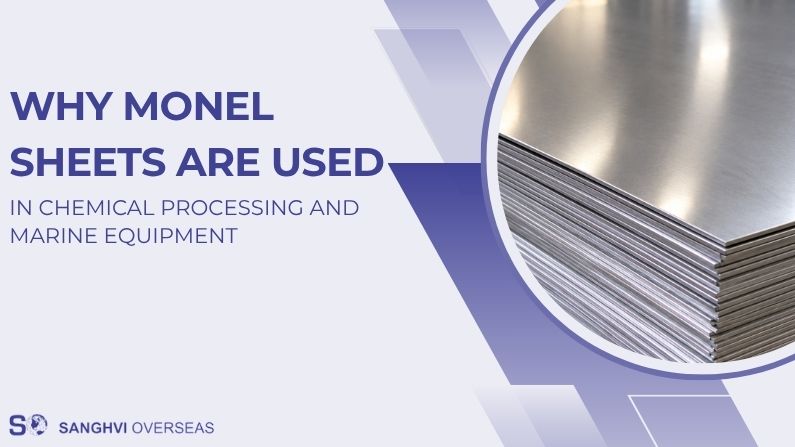
Monel sheets are nickel-copper alloys. They hold up well against corrosion and still carry decent mechanical strength, which is not always an easy combination to find. Chemical plants and marine equipment both deal with seawater, salts, acids and other substances that damage most metals over time. Ordinary materials can corrode faster in these conditions and need replacing sooner than expected. That is usually the point where Monel sheets for chemical processing equipment and marine parts are considered instead.
What Makes Monel Sheets Suitable for Demanding Equipment?
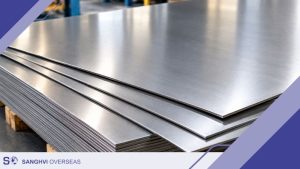
The alloy is mostly nickel, around 63 to 70%, mixed with copper and small amounts of iron and manganese. This gives it a mix of properties, corrosion resistance, strength, toughness, and it lasts. It resists seawater and a fair number of aggressive chemicals that would wear down standard steel within a few months. That is why Monel sheets are used for parts that sit in constant moisture or corrosive process media. The actual grade needs to suit the job. Not every Monel grade behaves the same way in every environment.
Corrosion Resistance in Chemical Processing
Process equipment is exposed to a mix of acids, alkaline solutions and chloride-heavy fluids, sometimes at high temperatures. Monel sheets handle a lot of this reasonably well. Some acids barely mark the surface. Chloride environments and alkaline solutions, which tend to cause pitting or stress corrosion in many stainless grades, leave Monel largely unaffected in a good number of cases. This means less surface wear, less material loss, and parts that do not need replacing as often. That said, temperature and chemical concentration change things. Performance is not fixed. The grade picked has to match what the process is actually doing, not just a general idea of what Monel can resist.
Why Monel Sheets Are Used in Marine Equipment
On a vessel or an offshore platform, saltwater exposure does not stop. Continuous contact with seawater and salt in the air corrodes materials that are not built to resist chloride attack. Monel sheets cope with this kind of exposure well, which is why they turn up in seawater handling components, pumps, valves, shafts and various structural or fabricated marine parts. The strength holds up under load, and the corrosion resistance means these parts keep working without needing constant attention. Fewer unplanned repairs, more predictable maintenance.
Performance Under Mechanical and Operating Conditions
Beyond corrosion resistance, Monel sheets carry genuine mechanical strength and toughness. Equipment that faces pressure cycling, vibration, impact or repeated use needs a material that will not crack or bend under that kind of stress. Monel keeps performing mechanically even while sitting in tough chemical or marine conditions, which is not always true of materials chosen purely for corrosion resistance. Operating temperature and load still matter here. Mechanical properties do shift at temperature extremes, so that needs checking too.
Chemical Processing Applications of Monel Sheets
- Chemical processing equipment relies on Monel for components that face constant exposure to reactive media.
- Storage and process tanks use Monel sheets to hold corrosive liquids without lining failures over time.
- Heat exchanger components benefit from their combination of corrosion resistance and thermal stability under cyclic loading.
- Pumps and valves built from Monel handle abrasive, corrosive flow without rapid seat or seal wear.
- Chemical transfer equipment moves aggressive fluids through Monel piping and fittings with fewer leak points.
- Acid-handling components depend on Monel where resistance to specific acids is a core design requirement.
Factors to Consider Before Selecting Monel Sheets
Selection decisions should start with the type and concentration of chemicals the equipment will contact.
- Seawater or chloride exposure levels determine how aggressively pitting or stress corrosion could develop over the service life.
- Operating temperature affects both corrosion behaviour and mechanical strength across the full range Monel will experience.
- Mechanical loads, including pressure, vibration, and impact, dictate the thickness and grade needed for structural reliability.
- Required sheet thickness depends on both mechanical load and expected corrosion allowance over years of service.
- Fabrication and welding requirements influence which grade suits the shop’s existing processes and equipment. The specific Monel grade chosen, whether 400, K-500, or another variant, changes resistance and strength characteristics significantly.
- Applicable ASTM specifications should guide procurement to confirm the material meets the required industry standard.
Actual operating conditions, not general assumptions, should always guide the final material selection.
Conclusion
The combination of corrosion resistance, strength and durability to withstand severe prolonged exposure makes Monel sheets used in chemical processing and marine equipment. This can mean longer service life in environments that would wear materials down quickly. The key to reliable performance is the selection of the correct Monel grade for the actual chemical exposure and service conditions.


