
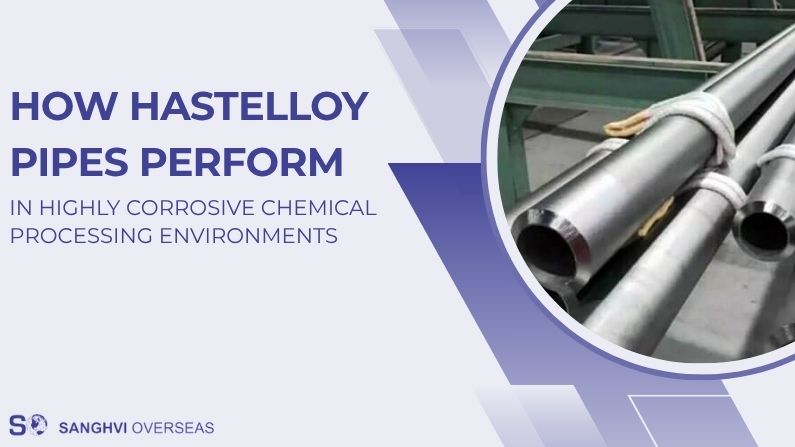
Hastelloy pipes are nickel-based alloy piping solutions built for severe chemical environments where ordinary materials simply don’t last. Chemical processing systems can expose pipes to acids, chlorides, high temperatures, and aggressive process fluids all at once, often for years of continuous operation. Hastelloy alloys get selected specifically because of their strong corrosion resistance and ability to maintain performance under these demanding conditions. This article focuses on how Hastelloy pipes actually perform once installed in these environments.
Why Chemical Processing Environments Are Challenging
Chemical processing plants routinely expose piping to a range of corrosive conditions: strong acids, chlorides, oxidizing and reducing chemicals, and contaminated process streams that shift in composition over time. Corrosion in these settings doesn’t stay contained; it leads to wall thinning, leakage, contamination, and eventual equipment failure if the material isn’t matched to the actual exposure. Conventional materials often can’t provide sufficient service life under these combined pressures, which is exactly the gap Hastelloy pipes were developed to close.
How Hastelloy Pipes Resist Corrosion
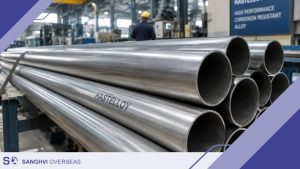
Nickel, chromium, molybdenum, and other alloying elements each play a specific role in Hastelloy grades, working together to resist both general corrosion and localized attack. Pitting and crevice corrosion, particularly common in chloride-containing environments, are areas where Hastelloy grades perform notably better than standard stainless steel. Depending on the specific grade, Hastelloy alloys can resist corrosion in both oxidizing and reducing chemical conditions though no single grade handles every chemical equally well. The alloy has to be matched to the exact chemical environment it will face, not selected on the strength of “Hastelloy” as a general category.
Performance Against Acids and Aggressive Chemicals
Chemical processing environments involving hydrochloric acid, sulfuric acid, and other aggressive media put real demands on piping material. Different Hastelloy grades offer different levels of resistance to specific chemicals, and grades such as Hastelloy C-276 are widely considered for severe corrosion conditions where broad chemical resistance is needed. No single Hastelloy grade should be assumed suitable for every chemical, though concentration, temperature, and exact chemical composition all need checking before a grade gets specified for a given process stream.
High-Temperature Performance of Hastelloy Pipes
Temperature is a genuinely important consideration in chemical processing, since corrosion rates tend to increase as process temperatures rise. Suitable Hastelloy grades can maintain mechanical integrity at elevated temperatures where other materials would start losing strength or accelerating corrosion. Both corrosion resistance and mechanical strength need evaluation at the actual operating temperature a pipe will see in service, not just at ambient conditions.
Resistance to Stress Corrosion Cracking and Localized Attack
Piping exposed to strong chemicals may experience stress corrosion cracking if residual stress is present in combination with a corrosive environment. Hastelloy’s resistance to localised corrosion mechanisms helps to ensure its reliability in demanding service, but such resistance does not eliminate the necessity for competent fabrication, welding and stress control during fabrication and installation. These qualities, the inherent resilience of the alloy, and the suitable fabrication methods combine to give reliable chemical process pipework in the long run.
Applications of Hastelloy Pipes in Chemical Processing
Hastelloy pipes serve as the backbone for critical chemical processing systems, especially where ordinary metals would fail under intense corrosion or heat. Instead of generic piping, plants rely on these high-performance alloys to handle the most demanding environments across a facility.
- Chemical reactors: Safe handling of hostile compounds, strong structural integrity in extremely volatile exothermic processes.
- Process pipe networks: Large facility design resists powerful corrosive chemicals with no localised weakening.
- Acid handling systems: Resist aggressive deterioration by strong acids for extended, reliable use.
- Heat exchangers: High thermal conductivity and resistance to extreme thermal expansion and internal chemical assault
Factors to Consider Before Selecting Hastelloy Pipes
Selection should account for chemical composition and concentration, along with operating temperature and pressure. Required corrosion resistance, pipe dimensions and wall thickness, and welding and fabrication requirements all factor in, as do applicable ASTM/ASME specifications and the specific Hastelloy grade under consideration.
Conclusion
Hastelloy pipe delivers consistent performance in extremely corrosive chemical processing environments. It can withstand aggressive chemicals, localised corrosion and rigorous operating conditions that few other materials can. But that performance is totally dependent on selecting the precise grade of Hastelloy for the actual process environment, not just assuming broad appropriateness. In such selection processes suppliers such as Sanghvi Overseas are typically called to assist match the proper grade to specific chemical, temperature and pressure conditions for safe and durable piping systems.


