
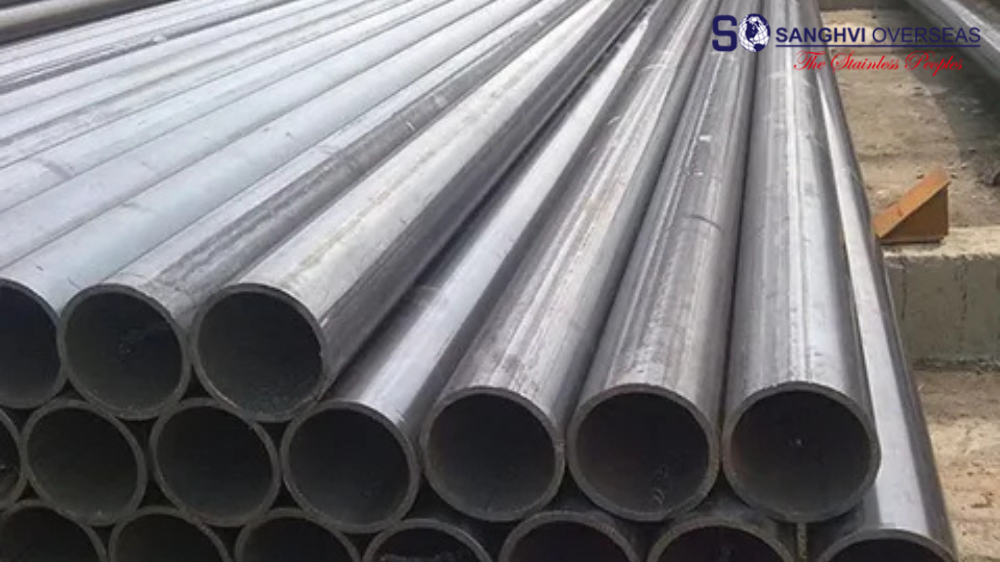
EFW tubes show up across industrial fabrication projects wherever piping runs need to be welded, machined, and assembled to close tolerances. Dimensional accuracy is one of the first things I check when a fabrication order comes in, because a tube that’s slightly out of round or oversized on wall thickness turns a straightforward weld-out into a fitting problem. Choosing between welded and seamless tubes comes down to fabrication requirements, tolerance bands, and what the tube will actually do in service. This blog compares both from a dimensional and fabrication standpoint.
Why Dimensional Accuracy Matters in Tube Fabrication
Dimensional consistency sets the pace for everything downstream in a fabrication shop. Tight fit-up between tube and fitting means less grinding, less filler material, and welds that pass inspection on the first pass instead of the third. When wall thickness or diameter drifts from batch to batch, welders have to adjust technique mid-run, which slows production and raises the chance of a defect. Poor dimensional control also wastes material an oversized tube gets trimmed down, and an undersized one might get scrapped outright. Wall thickness, outside diameter tolerance, straightness, and ovality are the four factors that most influence how smoothly a fabrication project runs.
Welded vs Seamless EFW Tubes: Dimensional Considerations
Outside Diameter and Wall Thickness Tolerances
Seamless tubes generally hold tighter wall thickness tolerances because the manufacturing process avoids the added-material buildup at a weld seam. Welded EFW tubes can match close tolerances too, but the weld bead area needs extra attention during quality checks. Consistency across production batches matters more than the tolerance number itself when a project needs hundreds of identical fittings.
Length Availability and Custom Sizing
Welded EFW tubes come in longer standard lengths because the manufacturing process isn’t limited by billet size the way seamless production is. That flexibility cuts down on field joints for long pipeline runs. Seamless tubes work well for shorter, high-pressure sections where a continuous wall matters more than run length. Project-specific sizing requirements usually decide which option saves more fabrication time.
Roundness and Straightness
Fit-up accuracy depends heavily on how round and straight a tube arrives at the shop. Welded tubes can develop slight ovality near the seam if forming isn’t controlled tightly, while seamless tubes tend to hold a more uniform cross-section along their length. Either type needs straightness verification before cutting, since a bowed tube throws off alignment on every joint that follows.
Weld Preparation and Edge Finish
Edge quality directly affects how clean a weld joint turns out. Seamless tubes typically arrive with a more uniform edge for beveling, since there’s no seam to work around. Welded tubes need the seam oriented away from critical weld zones during joint preparation, which adds a planning step but doesn’t reduce overall weld quality when done correctly.
Machining and Forming Performance
Bending, drilling, and other forming operations respond differently depending on tube type. Seamless tubes generally bend more predictably because material properties stay uniform around the circumference. Welded tubes can work just as well for most forming operations, but the seam location needs tracking so it doesn’t land on the outer radius of a tight bend, where stress concentrates.
Inspection and Dimensional Verification
Measuring outside diameter, wall thickness, and ovality before fabrication catches problems before they reach the welding bay. Ultrasonic thickness gauges and go/no-go ring gauges are standard tools for this step. Skipping dimensional verification on incoming material is one of the fastest ways to discover a tolerance mismatch mid-project instead of before it starts.
| Factor | Welded EFW Tubes | Seamless Tubes |
| OD Tolerance | Close, seam-dependent | Tighter, uniform |
| Wall Thickness Consistency | Good, batch-verified | Very consistent |
| Straightness | Good | Excellent |
| Length Options | Longer standard runs | Limited by billet size |
| Fabrication Suitability | High-volume runs | High-pressure, critical joints |
| Typical Applications | Structural, process piping | High-pressure service lines |
Choosing the Right Tube for Your Fabrication Project
Fabrication complexity should guide the decision before cost does. A project with multiple bends and tight forming tolerances benefits from seamless tube’s dimensional uniformity, while a long structural run favors welded tube’s length flexibility. Review welding and machining needs against the tolerance band each type offers, then weigh cost against the performance gap for the specific application.
Common Fabrication Mistakes to Avoid
Ignoring dimensional tolerances until the fitting stage causes rework that could have been caught at receiving inspection. Selecting the wrong tube type for the pressure class or forming requirement compounds that problem further downstream. Overlooking inspection before fabrication, assuming all tubes carry identical specifications across suppliers, and failing to match tube dimensions with actual project requirements round out the most common and most avoidable errors.
Summary
Welded and seamless EFW tubes each bring distinct dimensional strengths to a fabrication project: seamless tubes generally hold tighter tolerances and more uniform roundness, while welded tubes offer longer standard lengths and strong value for high-volume runs. Understanding these dimensional considerations upfront improves fabrication efficiency, cuts rework, and supports reliable long-term performance. For sourcing guidance on the right EFW tube specification for your project, get in touch with Sanghvi Overseas.


