
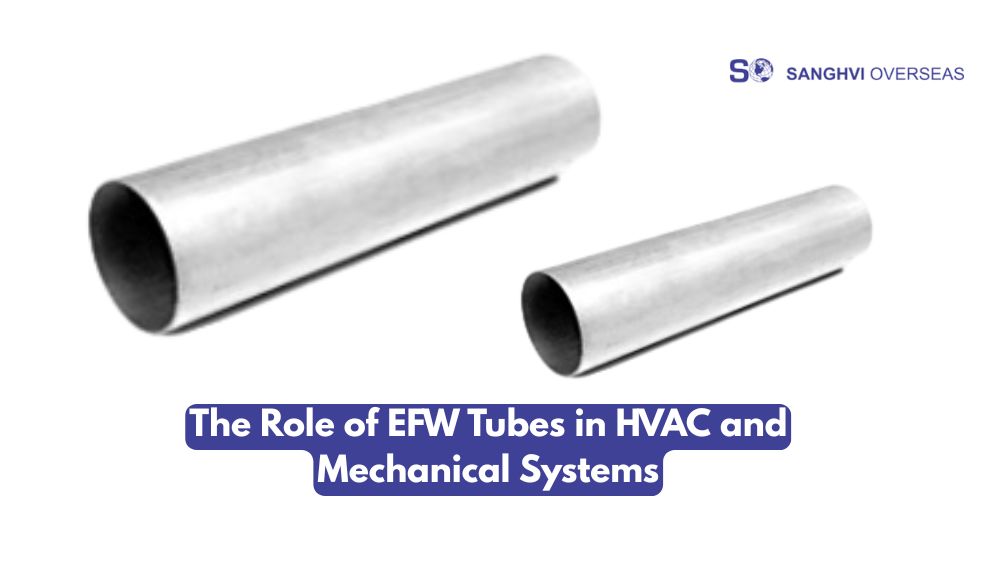
HVAC and mechanical systems depend on tubing that can handle pressure, heat, and daily wear without failure. A small problem in a pipe or tube can disrupt cooling, heating or air flow across an entire facility. As buildings grow larger and systems become more complex, the demand for strong and accurate welded tubes continues to rise. Electric fusion-welded tubes have become a preferred choice in many of these setups. They offer strength, size, flexibility, and stable performance. In HVAC work, EFW Tubes help move fluids and support structures while keeping systems efficient and long-lasting. Many project planners now rely on experienced EFW Tube Suppliers to ensure quality and consistency across installations.
What Are EFW Tubes?
Electric Fusion Welded Tubes, or EFW Tubes, are made by rolling steel plates into a tube shape and then welding the seam with very hot electric heat. In most cases, the process fuses the edges of the plate without adding any filler, making a strong and clean weld. This method gives you more control over the size and wall thickness, especially for larger diameters. For general use, carbon steel is common; for corrosion resistance, stainless steel is common; and for high strength or heat service, alloy steel is common. For larger sizes, EFW options are better than seamless tubes. Fusion welding is used to make EFW tubes, which makes them stronger than ERW tubes, which use pressure welding. This makes them better for heavy-duty use.
Key Properties of EFW Tubes
EFW Tubes are chosen for HVAC and mechanical systems because of their balanced set of mechanical and structural properties. These tubes manufacturing process allows better control over size and strength, which directly supports safe and stable system performance.
Uniform wall thickness and dimensional accuracy
EFW Tubes are produced from steel plates with controlled thickness, which helps maintain uniform walls throughout the tube length. This consistency ensures smooth fluid flow and reduces uneven stress in piping systems. In HVAC installations, this accuracy helps prevent vibration and long-term fatigue.
High strength and pressure-handling capability
The electric fusion welding process creates a strong seam that can handle high internal pressure. This makes EFW Tubes suitable for water circulation, steam movement, and other pressurised services. Their strength supports safe operation even in large and complex systems.
Good weld integrity and structural stability
EFW Tubes have a solid weld joint that offers stable mechanical performance over time. Proper fusion reduces the risk of seam failure during thermal cycles. This stability is important in systems that run continuously without shutdown.
Resistance to corrosion (depending on material grade)
These tubes are resistant to rust and corrosion when made of stainless steel or alloy steel. This is helpful for HVAC systems that move treated water or work in humid conditions. Corrosion resistance helps things last longer and need less maintenance.
Suitability for large-diameter applications
EFW Tubes are well suited for large diameters that are hard to achieve with seamless options. This allows engineers to design high-capacity lines with fewer joints. Fewer joints improve flow efficiency and reduce leak risk.
Role of EFW Tubes in HVAC Systems
HVAC systems rely on tubing that can manage temperature changes, pressure variation, and constant use. EFW Tubes support these needs by offering strength, size flexibility, and reliable weld performance. Their role extends beyond fluid transport to overall system stability and efficiency.
Use in chilled water and hot water circulation lines
EFW Tubes are widely used in chilled and hot water loops within HVAC systems. They handle both low and high temperatures without losing structural strength. This helps maintain steady flow and consistent heating or cooling output.
Application in air handling and duct support systems
These tubes are often used as structural supports for air handling units and large ducts. Their strength allows them to carry equipment loads without bending. This improves alignment and reduces vibration in air distribution systems.
Ability to handle temperature fluctuations
During use, HVAC systems often have to deal with changes in temperature. Electric Fusion Welded Tubes can expand and contract without cracking at the weld seam. This helps it stay reliable for a long time when used every day.
Contribution to energy efficiency and system reliability
Consistent inner dimensions help reduce friction losses during fluid flow. This supports efficient pump operation and lower energy use. Reliable tubing also reduces downtime and repair costs across HVAC systems.
Use in chilled water and hot water circulation lines
HVAC systems rely on stable water flow for cooling and heating. EFW Tubes handle both hot and chilled water without losing strength over time.
Application in air handling and duct support systems
These tubes are often used as support members in air handling units. Their strength helps carry loads while keeping structures stable.
Ability to handle temperature fluctuations
HVAC lines face constant temperature changes. Electric Fusion Welded Tubes manage expansion and contraction without weld failure.
Contribution to energy efficiency and system reliability
Smooth inner surfaces and consistent sizes reduce flow loss. This helps systems run efficiently with lower energy use.
Applications of EFW Tubes in Mechanical Systems
Mechanical systems place high demands on tubing due to pressure, load, heat, and continuous operation. EFW Tubes meet these demands across a wide range of industries. Their strength, size range, and weld quality make them suitable for both fluid handling and structural roles.
Industrial piping and fluid transport
EFW Tubes are widely used to carry water, oil, gas, and process fluids in industrial plants. Their ability to handle pressure and long pipe runs makes them reliable for day-to-day operations. Fewer joints also reduce the risk of leaks over time.
Boiler and heat exchanger systems
Boilers and heat exchangers operate under high temperature and pressure conditions. Electric Fusion Welded Tubes provide the strength needed to manage these loads without seam failure. This supports steady heat transfer and safe system performance.
Structural support in mechanical installations
In many mechanical setups, EFW Tubes act as support members for piping, machinery, and platforms. Their load-bearing capacity helps maintain alignment and stability. This reduces movement and stress on connected components.
Firefighting and sprinkler systems
Fire protection systems require pipes that remain reliable for long periods without use. EFW Tubes offer strong welds and durable construction, which is critical during emergency operation. Their size range also suits large building networks.
Cooling towers and refrigeration units
Cooling towers and refrigeration systems move large volumes of water continuously. EFW Tubes handle this flow while resisting moisture-related wear. Their strength supports outdoor installation and long service life.
Power plants and heavy engineering projects
Power plants and heavy engineering facilities rely on large-diameter tubing for steam, water, and support systems. EFW Tubes provide the scale and strength needed for these demanding environments. Their performance supports safe and stable plant operation.
Advantages of Using EFW Tubes in HVAC and Mechanical Systems
EFW Tubes offer practical benefits that support both performance and project efficiency. Their design and manufacturing process make them a dependable choice for large systems where safety, cost control, and ease of use matter.
Cost-effective solution for large-scale projects
EFW Tubes cost less than seamless tubes in large sizes. This helps control project budgets without cutting quality.
Availability in large diameters and lengths
They can be produced in long lengths and wide diameters. This reduces joints and speeds up installation.
High performance under pressure and thermal stress
The fusion weld holds up under heat and pressure. This makes the tubes reliable for demanding HVAC duties.
Ease of fabrication and installation
EFW Tubes are easy to cut, bend, and weld. Contractors save time during fitting and assembly.
Compliance with international standards
Most EFW Tubes meet global codes for pressure and quality. This supports safe and approved system design.
Selection Considerations for EFW Tubes
- Choosing the correct material and grade
- Pressure, temperature, and load requirements
- Weld quality and inspection standards
- Surface finish and corrosion protection
- Selecting reliable EFW Tube Manufacturers
Conclusion
EFW Tubes play a key role in HVAC and mechanical systems by offering strength, size flexibility, and steady performance. They support fluid flow, structural needs, and long service life across many applications. From building HVAC lines to large mechanical plants, Electric Fusion Welded Tubes help systems run safely and efficiently. Their balance of cost, strength, and reliability makes them a practical choice for modern infrastructure. Sanghvi Overseas continues to supply solutions that meet these needs. Contact Sanghvi Overseas, trusted EFW Tube Suppliers for high-quality tubing solutions for HVAC and mechanical applications.


