
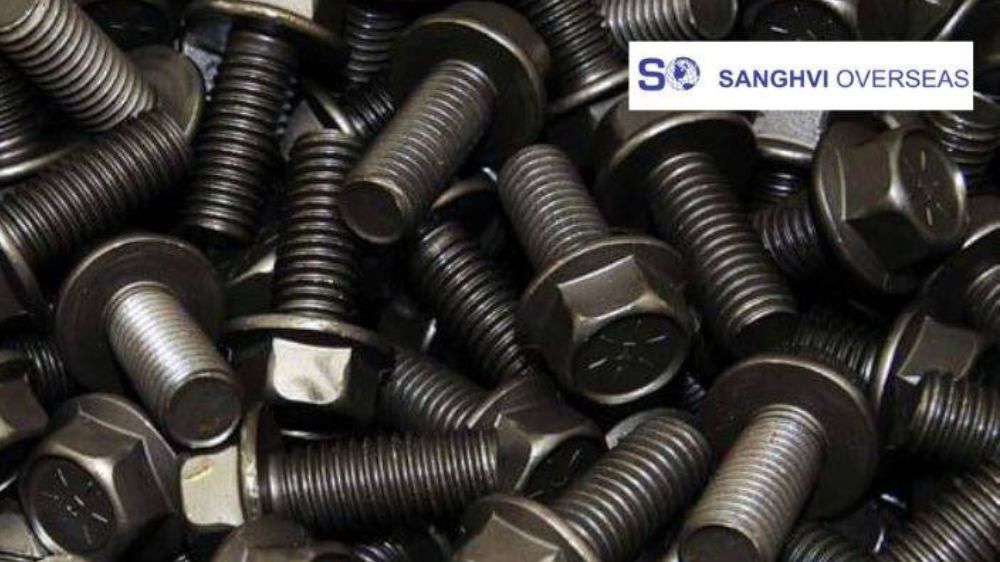
Steel bars are an important material for input for manufacturing, building, machining and fabrication sectors. Markets respect both black bars and bright bars as essential industrial commodities. But these types may differ significantly. They differ in manufacturing techniques, physical appearance, performance capabilities, and market pricing. Smart procurement engineers and managers learn these differences to make each type of bar fit exactly to its desired purpose.
What Is a Black Bar?
A Black Bar is a hot-rolled steel bar made by heating steel billets to high temperatures and running them through rolling mills to generate the desired cross-section. The high-temperature process produces iron oxide on the surface, providing the dark mill scale finish that is the hallmark of black bars. Typical materials are stainless steel, carbon steel, and alloy steels. When surface finish is not the primary issue, Black Bars are the choice when structural strength and machinability at a competitive cost are the requirements. Businesses looking for a black bar supplier can explore the available types of Black Bar for various engineering and fabrication applications.
What Is a Bright Bar?
Bright bar is a cold finished steel bar produced from hot-rolled bar stock and further finished by cold drawing, peeling, grinding or polishing to provide a smooth surface and close dimensional tolerances. Cold drawing is the process of drawing the bar through a die, which compresses the cross-section. This improves the surface quality as well as the mechanical qualities. This results in a bar with a clean, polished finish, correct dimensions and increased strength compared to the hot-rolled starting material.
Difference Between Black Bar and Bright Bar
Manufacturing Process
Black Bars are produced using hot rolling at high temperatures a high-throughput process that shapes the steel efficiently but leaves surface scale and wider dimensional tolerances. Bright bars undergo additional cold-finishing after hot rolling, which adds processing steps and cost but transforms the surface condition and dimensional consistency.
Surface Finish
Black Bars carry a rough, dark oxide surface from the hot rolling process. That mill scale is normal and expected; it doesn’t affect structural performance but does require removal before surface-critical applications. Bright bars feature a smooth, shiny, polished surface ready for close-tolerance machining or direct use in precision components without additional surface preparation.
Dimensional Accuracy
Black Bars are produced to wider dimensional tolerances adequate for structural applications and rough machining operations where exact diameter isn’t critical. Bright bars are held to tight tolerances that make them directly compatible with CNC machining operations where part dimensions must be consistent across production runs.
Mechanical Properties
Cold finishing improves bright bar mechanical properties through work hardening, producing better tensile strength, improved hardness, and better straightness compared to equivalent hot-rolled material. Black Bars, while strong for structural applications, don’t carry the same work-hardened property improvement. For applications where maximum strength-to-diameter ratio matters, bright bars have a performance advantage.
Machinability
Bright bars machine more cleanly than black bars because their smooth finish and tight tolerances reduce the setup time and tool wear involved in bringing the part to final dimension. Black Bars often require additional turning or grinding to remove mill scale and establish a clean machining surface before precision work begins.
Cost Difference
Black Bars cost less per kilogram the hot rolling process is simpler and faster than the cold-finishing operations that produce bright bars. For structural, heavy engineering, and bulk industrial applications where tight tolerances aren’t needed, the black bar’s cost advantage is substantial. Bright bars carry a price premium that’s justified only where their dimensional precision and surface quality are functionally required.
Corrosion Resistance
Corrosion resistance depends on the steel grade, not the finishing process. A stainless steel Black Bar resists corrosion just as effectively as a bright stainless bar the difference is surface condition and dimensional accuracy, not alloy performance. Stainless steel Black Bar is commonly used in corrosive environments where surface finish requirements are secondary to chemical resistance.
Applications of Black Bars
Structural fabrication, construction projects, heavy engineering, industrial machinery, manufacturing units, and automotive structures are the primary black bar application areas. Industrial Black Bar serves as feedstock for components where material is removed during machining so buying a rough bar and machining it to dimension is more economical than purchasing a finished bright bar with more dimensional precision than the application requires.
Bright Bar Applications
Precision engineering, CNC machining, shafts, fasteners, pump and valve components, automotive precision parts, and aerospace components are the primary bright bar territory. Where the bar goes directly into a precision assembly without significant additional machining, bright bar’s dimensional consistency saves production time and reduces rejection rates.
Black Bar vs Bright Bar: Which One Should You Choose?
Budget, surface finish, machining requirements, structural application, and dimensional precision all drive the decision. If the application is structural frames, supports, and load-bearing elements where tight tolerances don’t matter Black Bar delivers the strength needed at lower cost. If the application involves precision machining, CNC operations, or direct use in close-tolerance assemblies, bright bar’s additional cost is recovered in reduced machining time and better dimensional consistency. Heavy engineering and bulk industrial projects almost always favor black bars; precision component manufacturing almost always favors bright bars.
Why Choose a Reliable Black Bar Supplier?
Material quality assurance backed by test certificates, accurate dimensions within specification tolerances, multiple grades and sizes in stock, and timely delivery are the baseline requirements for any serious industrial Black Bar supplier. Compliance with applicable material standards ASTM, EN, or customer-specified equivalents should be documented on every order. We at Sanghvi Overseas supply stainless steel Black Bar, carbon steel, and alloy steel bars with full certification, consistent quality, and the manufacturing capability to support industrial procurement at any scale.
Conclusion
Black Bars and bright bars serve different industrial purposes one optimized for cost-effective structural and bulk applications, the other for precision machining and close-tolerance components. The right choice depends on the application’s dimensional requirements, surface expectations, and budget. Evaluate those factors carefully, confirm the material grade for the service environment, and source from a supplier who can back every order with proper documentation and consistent supply.


