
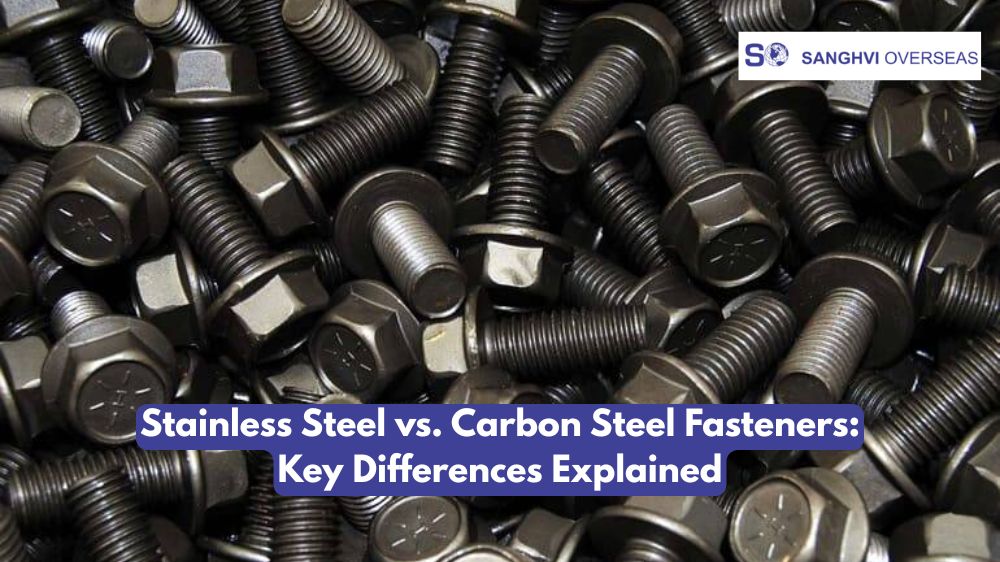
Fasteners are one of the most important components of major projects. Whether the towering skyscrapers in our cities or the massive machinery in our factories, they are used almost everywhere. Choosing the right material for these bolts and screws is a critical decision that affects the safety and life of the structure. We often see builders and engineers debating between stainless steel and carbon steel. This choice is about understanding how different metals behave in the industries. We will look at how they resist rust, how much weight they can carry, and where they work best.
What Are Stainless Steel Fasteners?
Stainless steel fasteners are shiny components made from stainless steel alloys that contain at least 10.5% chromium. This specific amount of chromium is what makes the metal “stainless” because it creates a thin layer that resists oxidation. We often use common grades like 304 for general tasks and 316 for marine environments. Apart from chromium, these fasteners might contain nickel or molybdenum. You will find them in hospitals, kitchens, and chemical plants where cleanliness and rust prevention are required.
What Are Carbon Steel Fasteners?
Carbon steel fasteners are primarily made of iron mixed with carbon. The amount of carbon determines how the metal behaves. Low-carbon steel is easy to shape, while high-carbon steel is very hard and rigid. We use heat treatment to change the properties of these fasteners, making them strong enough for the most demanding jobs. They are common in car engines and the frames of large buildings. These fasteners are the standard choice for projects where sheer strength is needed and the environment is dry. They are dependable and straightforward components for heavy-duty work.
Chemical Composition Comparison
The chemical composition of these two metals creates a massive difference in how they perform. In stainless steel, the presence of chromium and nickel is the defining feature. These elements create a protective shield on the surface of the metal. If the surface gets scratched, the chromium reacts with the air to heal the layer. Carbon steel is much simpler. It relies on the bond between iron and carbon. It does not have chromium to protect it. Because of this, carbon steel is very strong but it will react with moisture almost immediately. This lack of protective elements means carbon steel needs help from outside coatings to survive outdoors. Stainless steel handles moisture naturally.
Strength and Mechanical Properties
Strength is where carbon steel usually takes the lead. It has very high tensile strength, which means it can be pulled and stretched under massive loads without snapping. This makes it perfect for the foundations of bridges and the skeletons of skyscrapers. Carbon steel is also very hard after it has been through a heat treatment process. Stainless steel is also strong, but it can be more prone to a problem called galling, where the threads lock up during installation. Under intense vibration and constant stress, high-strength carbon steel bolts tend to stay more secure. We use advanced machinery like our Radial-Axial Ring Rolling Machine to ensure the grain of the metal is perfect for these high-stress applications.
Corrosion Resistance and Durability
Corrosion is the biggest challenge of any metal fastener. Stainless steel is built to fight this. It does not need any paint or plating to stay rust-free in the rain. This makes it incredibly durable over many decades. Carbon steel is different because it is very vulnerable to oxidation. If you leave a bare carbon steel bolt outside, it will turn red and start to flake away. To stop this, we apply coatings like zinc plating or hot-dip galvanising. These coatings act as a barrier. While these treatments help, they can eventually wear off or get damaged. In the long run, stainless steel provides a much longer service life without needing much attention.
Cost and Maintenance Comparison
The initial price of stainless steel fasteners is higher than carbon steel. This is because the raw materials like nickel and chromium are expensive to mine and process. Carbon steel is affordable to buy at the start of a project. However, the initial cost is only part of the story. You have to think about maintenance. Carbon steel fasteners might need regular inspections and new coatings to prevent rust. Stainless steel requires almost no maintenance once it is installed. This often makes stainless steel the better value over the total life of the project. Many buyers look for a certified Stainless Steel Fasteners supplier or Carbon Steel Fasteners supplier to ensure they get the right balance of cost and quality.
Industrial Applications Comparison
We see these fasteners used in very different places based on their strengths. Stainless steel fasteners are the first choice for marine and coastal structures. The salt in the air would destroy other metals, but stainless stays strong. They are also vital in the food and pharmaceutical sectors. These industries need to wash their equipment with harsh chemicals, and stainless steel can handle it. Apart from this, stainless steel is used in medical devices because it is safe for the human body.
Carbon steel fasteners are used everywhere in the construction industry. The steel frames of warehouses and the bolts in heavy machinery are almost always carbon steel. It is the best choice for automotive parts like suspension systems and engine mounts where the metal is protected from the rain but faces high heat and pressure. Structural steelwork depends on these fasteners because they can support the weight of thousands of tons of concrete and glass. In these heavy-duty sectors, the focus is on the load-bearing ability of the metal rather than its appearance.
How to Choose the Right Fastener Material
Deciding which material to use depends on a few simple factors. First, look at the environment. If there is water, salt, or chemicals nearby, stainless steel is the only safe choice. Second, think about the weight. If you are building a structure that needs to hold a lot of weight, the high strength of carbon steel is better. You also have to look at your budget for the whole life of the project, not just today. Finally, always check the industry compliance rules for your specific task. Making the right choice keeps people safe and saves money.
Conclusion
Understanding the differences between these materials is the key to a successful build. Stainless steel offers the best protection against rust and looks great for years. Carbon steel provides the brute strength needed for massive structures at a lower initial cost. Both materials have a place in modern industry. We recommend working with a trusted Stainless Steel Fasteners supplier or Carbon Steel Fasteners supplier to ensure performance, safety, and long-term reliability for your next project.


